
La vérification et le classement des codes à barres sont essentiels pour garantir que les produits circulent sans heurt dans les chaînes d'approvisionnement modernes de vente au détail, de logistique et de fabrication. En garantissant que chaque code imprimé répond aux normes de qualité mondiales, ces procédés assurent un balayage précis tout au long du cycle de vie d'un produit. Ce guide couvre les normes de classification ISO, la différence critique entre scanners de codes à barres et des vérificateurs, et des solutions de vérification en ligne efficaces.
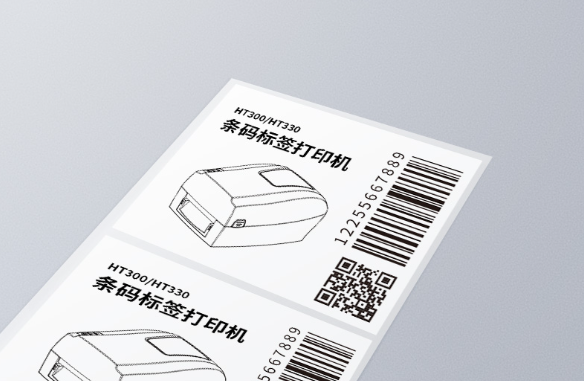
Réponse rapide: Qu'est-ce que la vérification et la notation des codes à barres?
La vérification des codes à barres évalue la qualité de l'impression des codes à barres par rapport aux normes mondiales ISO/IEC 15416 (1D) et ISO/IEC 15415 (2D). Contrairement au simple balayage, il détecte des défauts cachés tels que le faible contraste ou les problèmes de modulation pour garantir une lisibilité constante.
Le classement des codes à barres traduit ces mesures en un score de qualité, généralement allant de grade A (4,0) à grade F (0,0). La plupart des détaillants mondiaux et des fournisseurs de logistique exigent des fournisseurs qu'ils répondent à une qualité minimale, souvent de qualité B ou supérieure, pour assurer une analyse sans problème dans toute la chaîne d'approvisionnement.
Qu'est-ce que la vérification du code à barres?
La vérification des codes à barres est un processus normalisé qui évalue si un code à barres imprimé peut être balayé de manière fiable dans des environnements réels. Il va au-delà de la simple lecture de données pour analyser la structure optique du code et la conformité aux spécifications techniques.
En utilisant des équipements spécialisés tels que des vérificateurs de codes à barres, ce processus prédit si le code sera balayé avec précision sur n'importe quel appareil tout au long de la chaîne d'approvisionnement mondiale.
La vérification de la qualité du code est largement appliquée dans la fabrication, la logistique, le commerce au détail et les soins de santé, jouant un rôle essentiel dans l'amélioration de la traçabilité des produits, la prévention de la contrefaçon et l'assurance de la sécurité de la chaîne d'approvisionnement et de l'exactitude de l'information.
Qu'est-ce que le classement de code à barres?
Le classement des codes à barres évalue la qualité d'impression d'un code à barres et lui attribue une note ou une lettre. Une qualité élevée indique que le code à barres est facile à balayer, même dans des conditions difficiles. Une note faible suggère que les scanners peuvent avoir du mal à décoder le code à certains angles, distances ou conditions d'éclairage.
Comment fonctionne le classement des codes à barres
Le classement des codes à barres est effectué en mesurant plusieurs paramètres de qualité tels que
- ●Contraste de bord : Différence entre bars et espaces
- ●Modulation : uniformité de la réflexion bar/espace
- ●défauts : imperfections telles que des taches ou des vides
- ●Décodabilité : Comment facilement un scanner peut interpréter un motif
Ces paramètres se combinent pour déterminer la qualité finale, aidant les fabricants à détecter les problèmes d'impression avant que les produits ne pénètrent dans la chaîne d'approvisionnement.
ISO/IEC : Normes internationales pour la qualité des codes à barres
Comme différents codes à barres servent à des fins différentes, ils sont jugés par des règles différentes. L'Organisation internationale de normalisation (ISO) définit les trois piliers principaux du classement des codes à barres :
ISO/IEC 15416 (pour les codes à barres 1D)
Évalue les codes linéaires (comme UPC, EAN, Code 128) en mesurant la réflexion et le contraste des bords sur 10 lignes de balayage individuelles. La note finale est la moyenne de ces dix analyses, empêchant une seule rayure de provoquer une fausse défaillance.
ISO/IEC 15415 (pour les codes à barres 2D)
Utilisé pour les étiquettes standard comme les codes QR et DataMatrix. Il évalue toute la structure de la grille, en mettant l'accent sur le contraste du module et les dommages au motif fixe.
ISO/IEC TR 29158 (AIM DPM)
Les principaux détaillants (comme Walmart et Amazon) suivent les spécifications générales de GS1. Bien que GS1 utilise la méthodologie ISO sous-jacente, il applique des règles d'application plus strictes. Un code à barres peut passer les normes techniques ISO mais ne satisfaire pas aux exigences GS1 si le format des données est incorrect.
Comprendre les grades de code à barres (A à F)
La qualité du code à barres est exprimée sous forme de grade de lettre (ANSI) ou de score numérique (ISO). Comprendre ces niveaux vous aide à décider quand arrêter la ligne de production.
Classe A (4,0)
Excellent: qualité d'impression parfaite. Lisible par n'importe quel scanner, même avec un mauvais éclairage ou un mouvement rapide.
Classe B (3,0)
Bon: haute qualité avec des imperfections mineures. Complètement conforme à toutes les chaînes d'approvisionnement.
Classe C (1,5 à 2,0)
Acceptable : Lisible par la plupart des appareils. C'est l'exigence minimale standard pour la plupart des détaillants et des centres logistiques.
Grade D (0,5 à 1,0)
Faible: Lisible uniquement par des scanners spécialisés. Le risque d'échec de balayage est élevé; Il est recommandé de vérifier les paramètres de l'imprimante.
Classe F (0,0)
Échec : illisible ou défectueux. Ces étiquettes doivent être jetées immédiatement pour éviter les recharges.
Scanner de codes à barres vs Vérificateur de codes à barres: Quelle est la différence?
Maintenant que vous comprenez les normes de notation strictes (A-F), une question courante se pose : « Ne puis-je pas utiliser mon scanner régulier pour vérifier la qualité ? »
La réponse est non. Un scanner de codes à barres et un vérificateur de codes à barres servent à des fins complètement différentes. Un scanner lit simplement les informations codées, tandis qu'un vérificateur mesure la qualité du code à barres pour déterminer s'il répond aux normes ISO/IEC.

| Caractéristique | Scanner de codes à barres | Vérificateur de codes à barres |
|---|---|---|
| Fonction principale | Lise les données du code à barres | Qualité d'impression de codes à barres |
| Conformité aux normes | No | Oui (ISO/IEC 15416) |
| Sortie | Texte/données | Classe A-F + rapport de qualité complet |
| Détecte les problèmes d'impression | No | Oui (contraste, défauts, modulation, etc.) |
| Cas d'utilisation | Opérations générales (vente au détail, entrepôt, soins de santé, logistique) | Contrôle de qualité des codes à barres (impression d'étiquettes, lignes d'emballage, audit de conformité) |
En bref, un scanner vérifie si un code peut être lu; un vérificateur vérifie s'il est imprimé correctement.
Imprimante de codes à barres Hanin (HPRT) avec vérificateur pour le contrôle de qualité des codes à barres en ligne
Dans les industries réglementées comme la santé, l'automobile et la fabrication alimentaire, la qualité des codes à barres est non négociable. Les organismes réglementaires (comme la FDA) et les principaux détaillants appliquent strictement les normes de classification pour assurer la traçabilité. Ignorer ces normes entraîne souvent des amendes de conformité, des refus d'expédition et des rappels de produits coûteux.
Cependant, les contrôles manuels de qualité sont lents et peu fiables. Pour y remédier, Hanin présente une solution innovante : système d’impression et de vérification des codes à barres.
Le Hanin Industrial Barcode with Verifier intègre un module de vision OCR avancé directement dans le flux de travail d'impression. Il ne s'agit pas seulement d'imprimer; Il inspecte automatiquement les codes à barres, le texte, les symboles et les graphiques en temps réel, éliminant les problèmes tels que le flou ou les segments manquants avant qu'ils quittent l'usine.
- ●Vérification des codes à barres 100% en ligne: inspecte automatiquement chaque code à barres 1D et 2D par rapport aux normes ISO pendant le processus d'impression.
- ●Détection avancée des défauts : dépasse la simple numérisation pour détecter les défauts de caractère, les désalignements de position, les erreurs de motif et les défauts de fond, assurant que chaque étiquette est visuellement parfaite.
- ●Prévention des erreurs en temps réel : la machine s'arrête automatiquement et alerte les opérateurs si un code de faible qualité ou illisible est détecté, empêchant ainsi les étiquettes en double ou défectueuses.
- ●Efficacité automatisée: Conçu pour être intégré dans les lignes de production, éliminant le besoin de numérisation manuelle et réduisant considérablement les coûts de main-d'œuvre.
- ●Large application industrielle: Parfait pour l'étiquetage UDI des dispositifs médicaux, la traçabilité des aliments et la fabrication industrielle.
Caractéristiques et avantages clés:
En assurant une qualité constante de grade A/B, Hanin aide les fabricants à améliorer la traçabilité et à éviter les pertes économiques dues à des défauts de codes à barres.
Code à barres de Hanin imprimante d'étiquettes avec verifier représente l'avenir de la gestion des codes à barres. Nous contacter aujourd'hui pour en savoir plus sur nos produits et embarquer sur votre voyage vers la fabrication intelligente!